
If your mortgage is coming up for renewal in the next year or two, you’re entering one of the most consequential financial moments of your homeownership journey. And in today’s environment, it deserves far more attention than simply signing whatever your lender mails.
Nearly 70% of outstanding Canadian mortgages are expected to come up for renewal by the end of 2026, a wave largely driven by borrowers who locked in at historic lows during the pandemic. For many of them, renewal will mean higher monthly payments. But it doesn’t have to mean a bad deal. Understanding how mortgage renewal works, what the new rules mean for you, and how to position yourself strategically can make the difference between saving or losing thousands of dollars.
What Actually Happens When Your Mortgage Renews
How does a mortgage renewal work, exactly? Your mortgage has two components: the amortization period (typically 25 years) and the term (typically 1 to 5 years). When your term ends, you haven’t paid off your home, and the original rate agreement has expired. At that point, you renew with your existing lender, switch to a new one, or refinance entirely.
Your lender must send a renewal statement at least 21 days before your term ends, outlining their proposed rate and term options. If you do nothing, most lenders will automatically roll your balance into a new term at their posted rate, which is rarely their most competitive rate.
The New Mortgage Renewal Rules That Change Everything
The most significant recent change to mortgage renewal rules: as of November 21, 2024, mortgage holders who switch lenders at renewal are no longer required to re-qualify under the stress test, provided they aren’t increasing their loan amount or amortization. This change closed a long-standing gap. Insured borrowers (those who put less than 20% down) had been exempt since early 2024, but uninsured borrowers were still being stress-tested when shopping their renewal, which effectively trapped most Canadian homeowners with their existing lender. OSFI’s November 2024 update also extended the exemption to uninsured borrowers, levelling the playing field.
In practical terms: if you’re renewing your mortgage and you don’t need to increase the loan amount or extend the amortization, you can take your business to any federally regulated lender without re-qualifying at the higher Minimum Qualifying Rate. Your new lender will still assess your debt service ratios at the contract rate, but the qualification bar is meaningfully lower than it used to be. For a borrower carrying other debt, or whose income hasn’t kept pace with rate increases, that distinction is often the difference between being stuck and being able to negotiate.
What to Expect from Rates at Renewal
The Bank of Canada has moved through a significant cutting cycle and is currently holding its overnight rate at 2.25%, with most major bank economists expecting it to stay there through the end of 2026. That’s meaningful relief from the 5% peak, but it’s still well above the sub-2% environment many pandemic-era borrowers locked into.
Practically speaking, borrowers who fixed at 1.5%–2% in 2020 or 2021 are almost certainly facing renewal rates in the 4%–5% range. Payment increases of 15%–25% are realistic for this cohort. Variable-rate borrowers may have already absorbed much of the pain and could see modest payment reductions as rates settle.
Rates are declining, but not reverting to pandemic lows. Budget for renewal in the 4%–5% range regardless of what ultimately materializes.
Fixed vs. Variable: How to Actually Decide
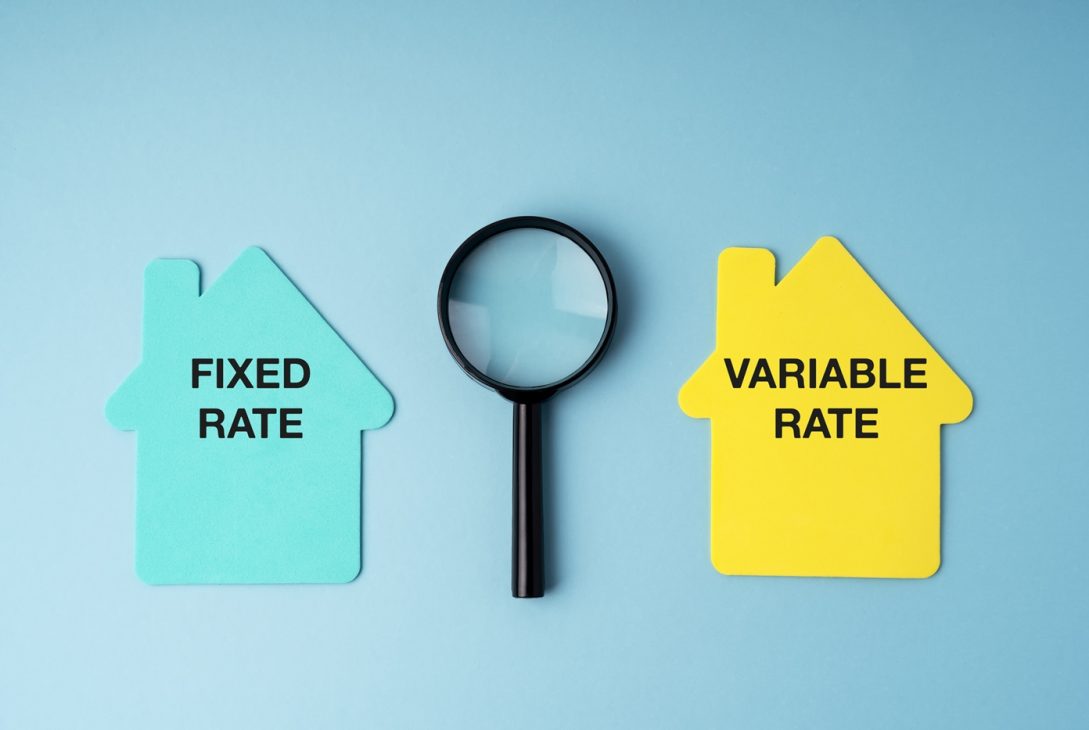
A fixed-rate mortgage locks your payment for the full term, predictable, but you won’t benefit if rates fall further. Fixed makes sense if you’re managing tight cash flow or carrying other debt and can’t absorb payment variability.
A variable-rate mortgage tracks the Bank of Canada policy rate. In a falling rate environment, it can save money. The tradeoff is exposure to reversals if inflation stays stubborn longer than expected.
One option many borrowers overlook: a shorter fixed term. A two- or three-year fixed protects your payment now while getting you back to the table sooner, positioned to renew again in what could be a more favourable environment.
When to Start (Most People Wait Too Long)
Most lenders allow you to hold a renewal rate up to 120 days before your term ends. That means you can lock in today and still renegotiate downward if rates drop, while being protected if they rise. Here’s the timeline that works:
- 120 days out: Start shopping rates. Apply for mortgage broker help early, brokers access rates from 30+ lenders that you won’t find by walking into your bank.
- 90 days out: Hold your preferred rate. Review amortization and whether prepayments make sense.
- 30–60 days out: Finalize your lender choice and review the full renewal agreement carefully before signing.
Waiting for your lender’s renewal notice puts you on their timeline, not yours.
Is Switching Lenders Worth It?
Banks count on inertia. Posted renewal rates at major banks are routinely 0.5%–1.0% higher than what’s available through a broker or by switching lenders. At a $600,000 balance, a 0.5% rate difference compounds to more than $15,000 in additional interest over a five-year term.
With the new mortgage renewal rules removing the stress test burden for insured switchers, the practical barrier to changing lenders is lower than it’s ever been. Mortgage renewal & transfer assistance is one of the highest-value services a broker provides. They approach multiple lenders simultaneously and present you with real competitive offers, not just your bank’s preferred margin.
When Renewal Is the Right Time to Refinance
Not every borrower should simply renew. For some, it’s the best opportunity in years to restructure more broadly.
If you’re carrying high-interest debt, credit cards, lines of credit, and personal loans, refinancing at renewal to consolidate that debt into your mortgage can significantly reduce the monthly cash burden. You’re trading short-term, high-rate debt for long-term, lower-rate debt. Done right, it simplifies your finances and frees up cash flow.
The key distinction:
- Renewal = continuing your mortgage at a new rate and term with no change to principal
- Refinancing = restructuring the mortgage, which may involve borrowing more, adjusting amortization, or breaking early
Breaking a term early involves a prepayment penalty, but a broker can model whether the math works in your favour.
Make Your Renewal Work for You
The updated mortgage renewal rules have genuinely shifted power back toward borrowers. But that power only materializes if you act on it. Start four months early, know your credit position, get competing offers, and understand whether refinancing or consolidation makes sense before you commit to another term.
The team at Dove Mortgages works with borrowers across Ontario and Alberta, with access to over 30 lenders and experience handling complex files, from multiple rental properties to high-net-worth clients. If your renewal is on the horizon, don’t wait for your lender to reach out first. Start the conversation early, and make the renewal work for you.